

Categories
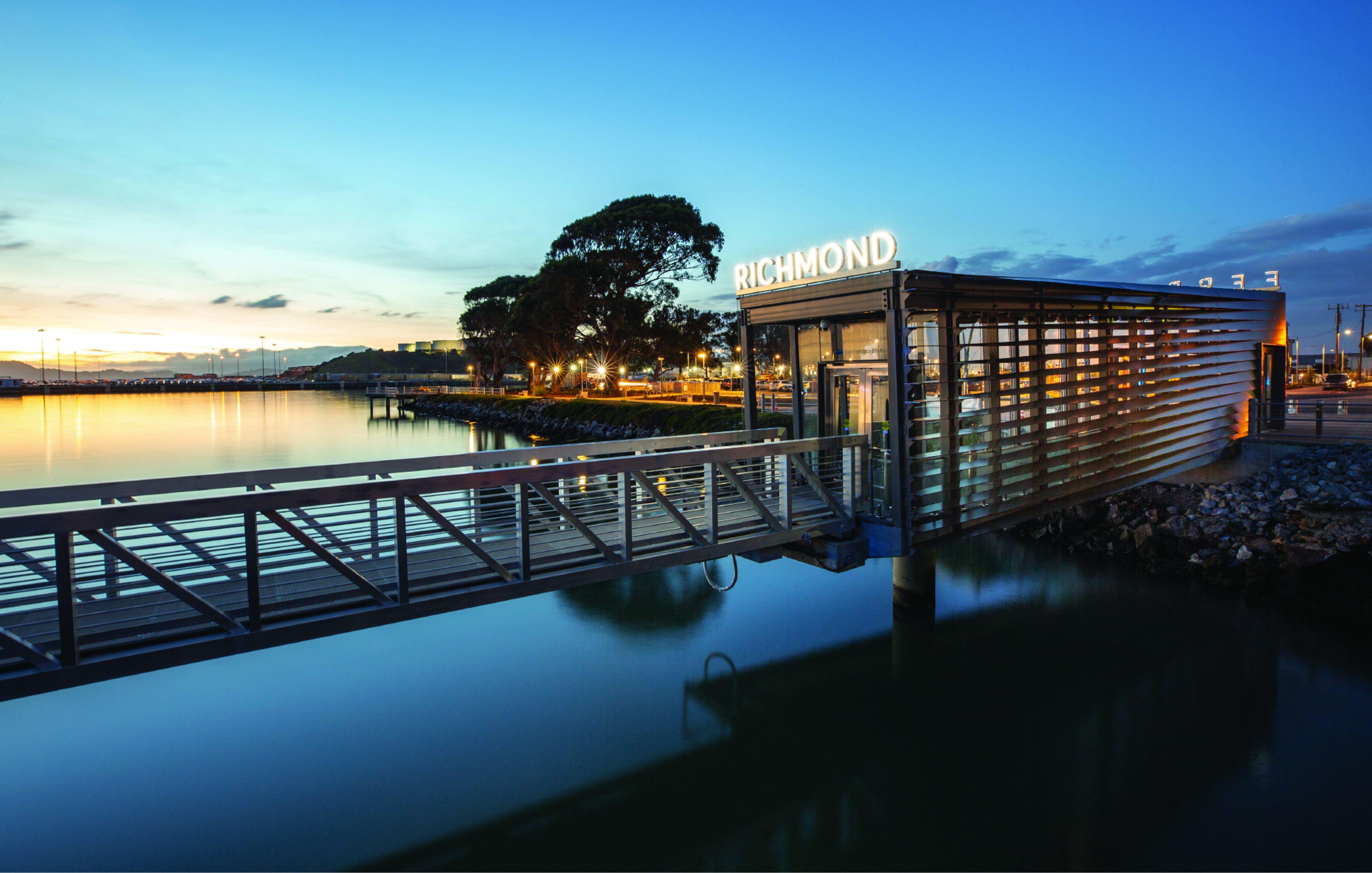
Richmond & Marina BayRichmond Ferry ridership topped 205,000 boardings during the first half of 2026, highlighting the growing use of Richmond's waterfront connection to San Francisco. For residents, commuters, home buyers, and property owners in Marina Bay and greater Richmond, the trend puts additional attention on one of the waterfront's most distinctive transportation amenities.
Public ridership data is published by San Francisco Bay Ferry . The Richmond Standard, reporting from that data, calculated 205,545 Richmond-route boardings between January 2 and June 30, 2026. Monthly boardings increased from 29,203 in January to 38,771 in June.
That's an important distinction: these figures represent boardings, not 205,545 individual people. San Francisco Bay Ferry defines a boarding as one passenger getting on a vessel, so a rider making a round trip would generally account for two boardings.
Why Is Richmond Ferry Ridership Getting Attention?
The numbers show increasing use of the Richmond waterfront ferry connection during the first half of 2026.
Richmond-route boardings rose from 29,203 in January to 38,771 in June, according to the ridership figures summarized by the Richmond Standard from San Francisco Bay Ferry's public data.
Richmond's growth also comes as ferry travel throughout the Bay Area has been experiencing strong ridership. For Richmond specifically, that matters because the ferry provides a direct transportation option from the city's waterfront to Downtown San Francisco.
The larger takeaway isn't simply that more ferry trips are being recorded. It's that residents and visitors are actively using an amenity that has become part of how Richmond's waterfront connects with the rest of the Bay Area.
Why Does the Richmond Ferry Matter for Marina Bay?
One of Marina Bay's defining characteristics is the combination of waterfront living and regional accessibility.
San Francisco Bay Ferry currently provides daily service between Richmond and Downtown San Francisco, with an approximate transit time of 35 minutes.
That gives residents another transportation option beyond relying exclusively on Interstate 80 or BART. For someone who works in San Francisco, follows a hybrid work schedule, or simply wants more ways to travel around the Bay, that flexibility can be meaningful.
The Richmond Ferry Terminal is located at 1453 Harbour Way South. San Francisco Bay Ferry currently lists free adjacent parking, secure and open-air bicycle facilities, and an AC Transit connection to Richmond BART among the terminal's transportation amenities.
For Marina Bay residents, those transportation options complement other features associated with the waterfront lifestyle, including shoreline access, open space, and nearby recreational opportunities.
Does Growing Ferry Ridership Affect Richmond Real Estate?
Growing ferry ridership does not automatically mean Richmond home prices will increase, and ferry access should not be treated as a guarantee of future appreciation.
Real estate values depend on many factors, including exact location, property condition, inventory, interest rates, buyer demand, views, HOA costs, comparable sales, insurance considerations, and broader economic conditions.
What the ridership numbers do demonstrate is that people are actively using an amenity that helps differentiate Richmond's waterfront.
Buyers don't evaluate a home based only on bedrooms, bathrooms, and square footage. They also think about what everyday life will look like.
- How will I get to work?
- Do I have transportation options besides driving?
- How easily can I reach San Francisco?
- Can I walk or bike near the waterfront?
- What amenities will I actually use?
- How does this location fit my weekly routine?
For certain buyers, convenient access to the Richmond Ferry may be one of the lifestyle features that makes Marina Bay or another Richmond waterfront neighborhood stand out.
What Does Growing Ferry Use Mean for Richmond Home Sellers?
For sellers, the bigger lesson is simple: you're not only marketing the house — you're also helping buyers understand the lifestyle surrounding it.
A well-positioned Richmond or Marina Bay listing should communicate both the property itself and what living in that location can offer.
Depending on the home, that story may include waterfront access, neighborhood parks, the Bay Trail, nearby businesses, Marina Bay amenities, and convenient access to the Richmond Ferry.
For a buyer commuting into San Francisco several days each week, explaining the actual transportation options can be more useful than simply describing a property as being in a "convenient location."
Strong real estate marketing identifies the features most relevant to likely buyers and gives those features meaningful local context.
If you're considering selling, learn more about Ask Ponytail's East Bay home-selling strategy and how preparation, pricing, presentation, and marketing can help position a property for its specific market.
You may also find this helpful: How Smart Pre-Listing Decisions Can Add Thousands to Your Sale .
What Should Richmond Home Buyers Consider?
If ferry access is important to your lifestyle, don't evaluate it only by looking at a map.
Experience the commute yourself.
Visit the Richmond Ferry Terminal around the time you would normally travel. Drive, walk, bike, or take transit from the neighborhood you're considering. Spend time along the waterfront and see how that routine actually feels.
For some buyers, the ferry may simply be an occasional convenience. For others, it could become part of the reason Marina Bay or Richmond fits their lifestyle.
You can explore current East Bay homes for sale or contact Sara and the Ask Ponytail team for help evaluating Richmond, Marina Bay, Point Richmond, and surrounding East Bay communities.
Richmond's Waterfront Story Keeps Getting More Interesting
The ferry is only one piece of the larger conversation surrounding Richmond's waterfront.
Ask Ponytail is also following developments surrounding OpenAI's potential presence in Marina Bay — another story bringing attention to this part of Richmond.
Read our local breakdown: OpenAI May Be Coming to Marina Bay, Richmond .
Neither ferry ridership nor any individual commercial development should be used to make sweeping predictions about future real estate values.
Transportation, employment activity, neighborhood amenities, waterfront investment, housing inventory, interest rates, and buyer demand can all play roles in how a community evolves.
For homeowners and buyers, the key is to follow those changes while evaluating the actual real estate data for the specific neighborhood and property involved.
What Is the Bigger Picture for Richmond?
More than 205,000 Richmond ferry boardings during the first half of 2026 is a notable milestone. But the more interesting story may be what those numbers represent.
People are incorporating Richmond's waterfront connection into their commutes, weekend plans, and everyday routines.
For homeowners, buyers, and investors watching Richmond and Marina Bay, that makes the ferry more than a transportation statistic. It is part of the connectivity and lifestyle story of Richmond's waterfront.
And that's a local real estate trend worth continuing to watch.
RICHMOND • MARINA BAY • EAST BAY
Thinking About Buying or Selling in Richmond?
Real estate is hyperlocal. Two homes only a few blocks apart can perform differently depending on condition, exact location, views, HOA considerations, improvements, pricing strategy, inventory, and current buyer demand.
If you're considering buying or selling in Richmond, Marina Bay, Point Richmond, or elsewhere in the East Bay, let's look at your specific situation rather than relying on broad headlines.
No pressure. No obligation. Just a helpful conversation about your real estate goals.
Frequently Asked Questions About the Richmond Ferry
How many boardings did the Richmond Ferry have in the first half of 2026?
The Richmond Standard, using San Francisco Bay Ferry's public ridership data, reported 205,545 Richmond-route boardings between January 2 and June 30, 2026. A boarding represents one passenger getting on a ferry, so the figure should not be interpreted as 205,545 unique individuals.
How long is the ferry ride from Richmond to San Francisco?
San Francisco Bay Ferry currently lists the Richmond-to-Downtown San Francisco transit time at approximately 35 minutes. Schedules and service conditions can change, so riders should check the current SF Bay Ferry schedule before traveling.
Where is the Richmond Ferry Terminal?
The Richmond Ferry Terminal is located at 1453 Harbour Way South in Richmond, California, at Ford Point along the Richmond waterfront. It provides daily ferry service between Richmond and Downtown San Francisco.
Does the Richmond Ferry run on weekends?
Yes. San Francisco Bay Ferry currently lists daily Richmond service, including weekends. Departure times and holiday schedules may change, so passengers should confirm the current schedule with SF Bay Ferry before traveling.
Is there parking at the Richmond Ferry Terminal?
Yes. San Francisco Bay Ferry currently lists free parking in the lot adjacent to the Richmond Ferry Terminal, with 362 spaces. The terminal also has bicycle facilities and an AC Transit connection serving Richmond BART.
Does living near the Richmond Ferry increase home values?
There is no guarantee that proximity to the Richmond Ferry will increase a home's value. Property values depend on many factors, including exact location, condition, inventory, buyer demand, interest rates, views, HOA costs, insurance considerations, and comparable sales. Convenient transportation and waterfront access can, however, be attractive lifestyle features for some buyers considering Marina Bay and Richmond.
About Sara Min Zhao
Sara Min Zhao, REALTOR®, DRE #01449007, is the founder and Chief Listing Strategist of Ask Ponytail and specializes in East Bay real estate. Sara helps homeowners prepare, price, position, and market their properties with a strategy tailored to the home and its local market.